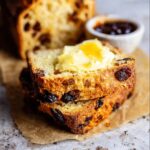
Description
This classic Irish Soda Bread recipe yields a wonderfully tender and moist loaf, enriched with buttermilk and optionally studded with raisins or dried cherries. Traditionally made without yeast, the bread relies on baking soda and buttermilk for a quick rise, producing a golden crust and a soft crumb perfect for slicing and serving with butter, jam, or savory dishes like corned beef and cabbage.
Ingredients
Scale
Dry Ingredients
- 4 cups sifted all purpose flour (spooned into the cup and leveled)
- 1/3 cup granulated sugar
- 1 and 1/2 teaspoons baking soda (fresh)
- 2 teaspoons kosher salt (or 1.25 teaspoons table salt)
Fat and Liquid Ingredients
- 2 tablespoons cold butter
- 1/4 cup vegetable oil (light olive oil recommended)
- 1 and 1/2 cups buttermilk
- 1 large egg
- 1 large egg yolk
Add-ins (Optional)
- 1 and 1/2 cups zante currants, raisins, or dried cherries
Instructions
- Preheat the Oven: Set your oven to 425 degrees F to ensure it reaches the right temperature for baking the bread.
- Plump the Raisins (Optional): Boil a small pot of water, then turn off heat and pour over 1 and 1/2 cups of raisins or dried fruit. Cover and let sit for 10 minutes to soften, then drain and let dry slightly.
- Sift the Flour: Spoon flour into a measuring cup, level it with a knife, then sift it through a mesh strainer into a large bowl. Repeat until you have 4 cups sifted.
- Combine Dry Ingredients: Add sugar, baking soda, and salt to the sifted flour. Mix thoroughly to distribute evenly.
- Cut in the Butter: Using a pastry cutter, incorporate 2 tablespoons of cold butter into the dry mixture until it resembles coarse crumbs.
- Add the Oil: Drizzle the 1/4 cup vegetable oil in small amounts over the flour mixture, cutting it in with the pastry cutter. Avoid smoothing or overblending the dough.
- Toss in Raisins: If using, add the plumped and drained raisins to the flour mixture and toss to coat evenly.
- Mix Buttermilk and Eggs: In a glass measuring cup, whisk together 1 and 1/2 cups buttermilk with 1 large egg and 1 egg yolk until smooth.
- Combine Wet and Dry Ingredients: Add the buttermilk mixture to the flour mixture and gently fold with a rubber spatula until the dough comes together.
- Form the Dough: Turn the dough onto a floured surface and knead just once or twice to bring it together into a rough, shaggy dough. Shape into a 6 to 7 inch round.
- Prepare the Baking Surface: Spread 1/2 tablespoon butter on a cast iron skillet or baking sheet, or line it with parchment paper.
- Score the Bread: Transfer the dough to the prepared pan and use a serrated knife to cut a deep X about 1 inch into the top to help heat penetrate.
- Bake: Bake for 20 minutes at 425°F, then loosely cover the top with foil to prevent overbrowning. Continue baking another 30–35 minutes until a skewer inserted is clean and an instant read thermometer reads 180°F. The bottom should sound hollow when tapped.
- Finish and Cool: Remove bread from oven, brush the top with melted butter, and let cool on a wire rack before slicing. Serve plain or with butter and jam, or as a hearty side to traditional dishes.
Notes
- Use fresh baking soda to ensure proper rise; expired baking soda will affect the bread’s texture.
- Plumping the raisins is optional but helps keep them moist and flavorful in the bread.
- Do not over-knead the dough; a shaggy, lightly handled dough results in a better crumb texture.
- The scoring (cutting an X) on top is essential for even baking and allows steam to escape.
- Use a cast iron skillet or a heavy baking sheet for best crust development.
- The bread is best enjoyed fresh but can be stored in an airtight container for up to 2 days or frozen for longer storage.
- Adjust salt amount depending on type used (kosher vs table).