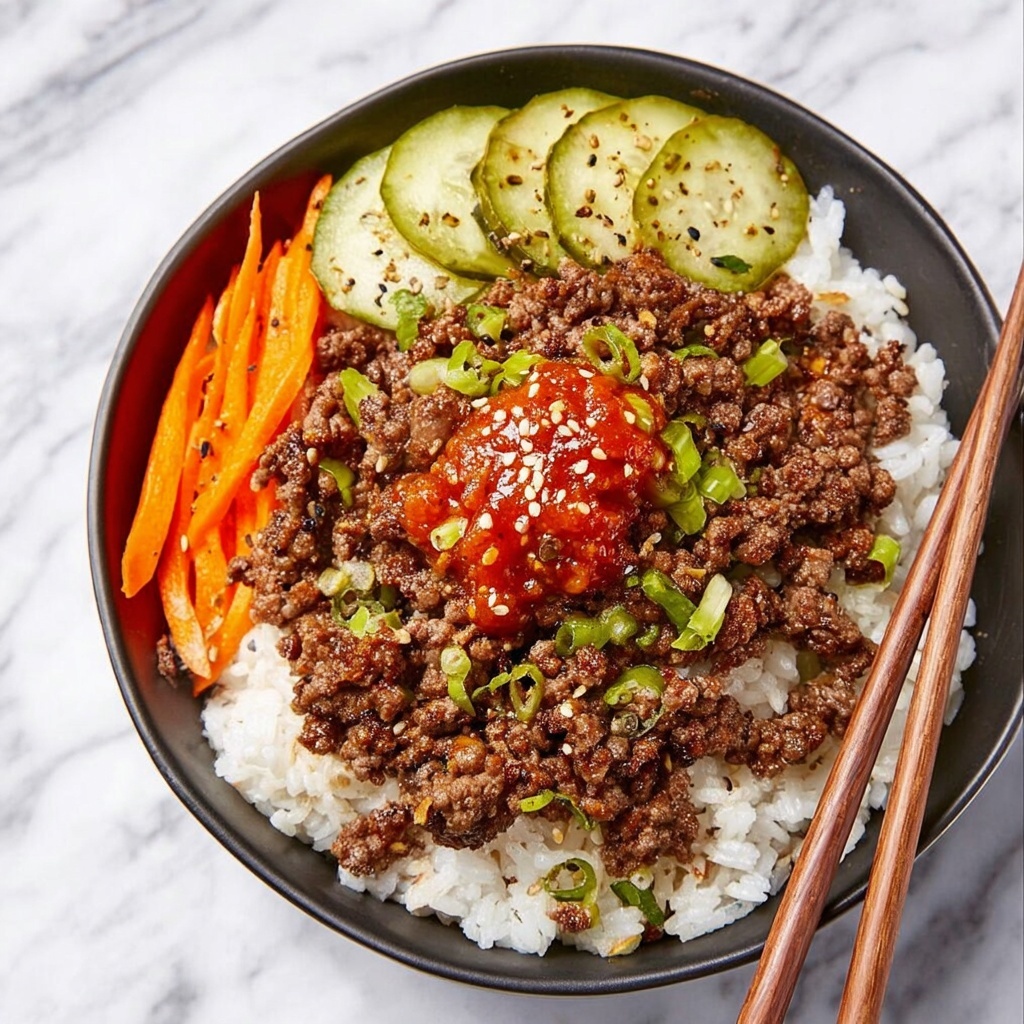
If you are craving a meal that’s bursting with bold flavors, is quick to prepare, and feels like a warm hug in a bowl, you have got to try this Korean Beef Bowls Recipe. It combines savory, sweet, and spicy notes with a delightful mix of textures from the tender ground beef to crisp fresh vegetables, all served over comforting steamed rice. Whether you’re feeding a hungry family or just want a satisfying dinner that doesn’t require hours in the kitchen, this recipe is both approachable and incredibly flavorful—one of my absolute go-to weeknight favorites!
Ingredients You’ll Need
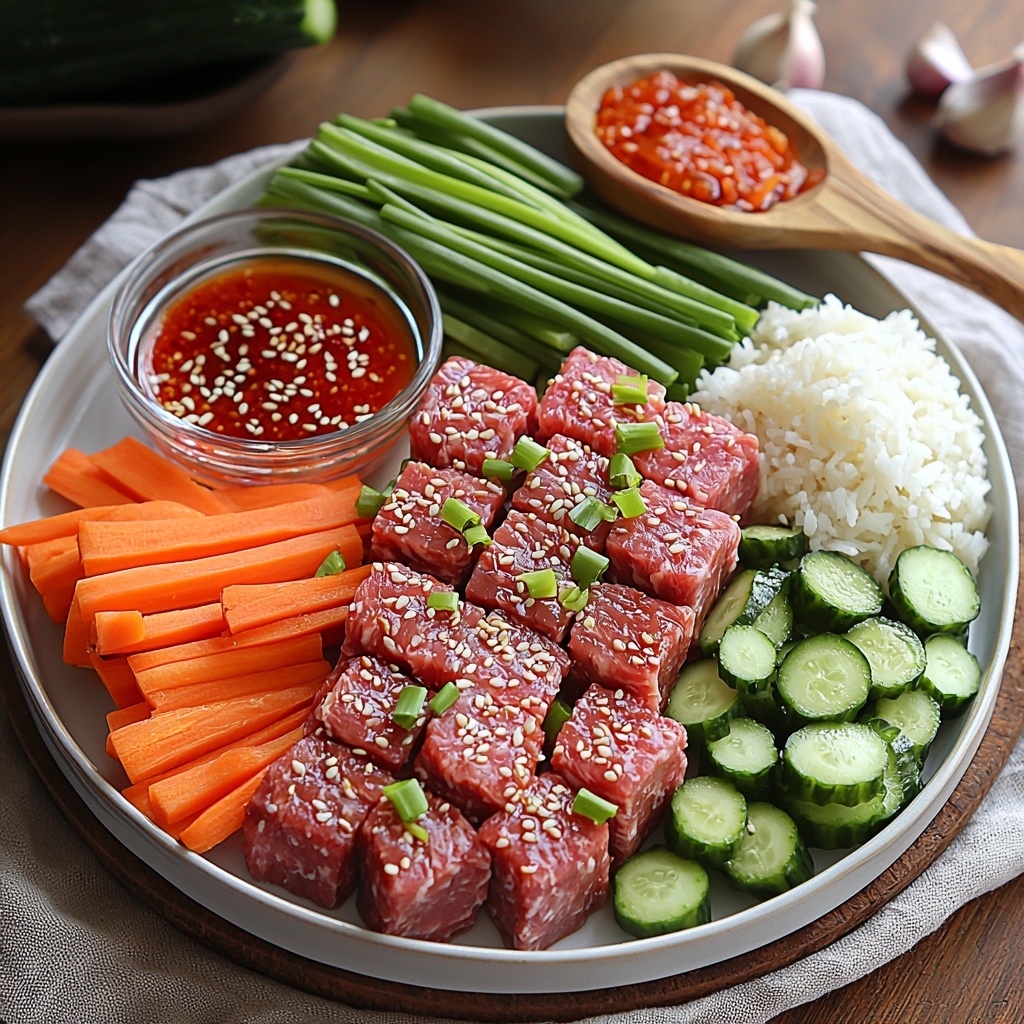
The magic of this Korean Beef Bowls Recipe lies in its straightforward ingredients, each carefully chosen to build layers of flavor and texture. From the saltiness of soy sauce to the subtle sweetness of brown sugar, these components come together to create a harmonious dish that’s as beautiful as it is delicious.
- Soy sauce or Tamari: Adds a rich, salty umami base that deepens the flavor of the beef.
- Brown sugar: Balances the saltiness with a gentle sweetness and caramel undertone.
- Water: Helps to blend the sauce ingredients and keeps the beef moist as it simmers.
- Rice vinegar: Brings a bright, tangy note that lifts the overall flavor.
- Toasted sesame oil: Provides a nutty aroma that’s unmistakably Korean.
- Salt and black pepper: Basic seasonings to enhance every other flavor element.
- Red pepper flakes: Add just the right amount of heat for a subtle kick.
- Avocado oil: Ideal for cooking because it has a high smoke point and a mild flavor.
- Ground beef (85/15): Gives the dish its hearty, meaty backbone and a juicy texture.
- Green onions: Both the white and green parts add fresh, oniony brightness, used at different steps for layered flavor.
- Garlic cloves and fresh ginger: Essential aromatics that give the beef its bold, zesty punch.
- Cooked white rice: The perfect neutral base that soaks up the sauce.
- Fresh or pickled carrots and cucumbers: Bring crunch and a refreshing contrast to the savory beef.
- Toasted sesame seeds (optional): Add texture and enhance the nutty flavor of the dish.
- Gochujang or sriracha (optional): For anyone who loves a spicy, fermented chili boost.
How to Make Korean Beef Bowls Recipe
Step 1: Make the Sauce
The sauce is the soul of this Korean Beef Bowls Recipe, blending soy sauce, brown sugar, water, rice vinegar, toasted sesame oil, salt, black pepper, and red pepper flakes. Whisk these ingredients together in a bowl so the sugar dissolves completely and the flavors meld beautifully. Setting this aside allows the savory and sweet notes to deepen while you prepare the rest of the ingredients.
Step 2: Cook the Meat
Heat 1 tablespoon of avocado oil in a large skillet over medium heat. Once it’s hot and shimmering, add the ground beef. As it cooks, break it apart with a spatula to ensure even browning and prevent clumps. After about 7 to 8 minutes, when the beef is no longer pink, push it to one side of the skillet to create space for the aromatics.
Step 3: Add Aromatics
Add the remaining tablespoon of avocado oil, then toss in the white parts of the green onions, finely minced garlic, and fresh ginger. These ingredients cook quickly but pack a punch, so sauté them for just 30 seconds until fragrant without burning. This step infuses the beef with vibrant flavor and welcoming aroma.
Step 4: Combine and Simmer
Pour the prepared sauce over the beef and stir to coat everything evenly. Lower the heat to medium-low and let the mixture simmer until the sauce reduces by about half—this takes around 4 to 5 minutes. As the sauce thickens, it clings to the beef for maximum flavor impact. Stir in three-quarters of the chopped green parts of the green onions near the end for a fresh pop of color and zest.
How to Serve Korean Beef Bowls Recipe
Garnishes
The finishing touches really elevate this Korean Beef Bowls Recipe. Scatter the remaining green onions over the top for freshness, sprinkle toasted sesame seeds for a bit of nuttiness and crunch, and add vibrant pickled or fresh carrots and cucumbers on the side. A dollop of gochujang or a drizzle of sriracha brings an optional spicy element that brightens every bite.
Side Dishes
This dish is hearty and filling on its own, but if you want to round out your meal, consider simple Korean sides like kimchi, steamed bok choy, or a light seaweed salad. These complement the beef bowls without overpowering their intriguing flavors.
Creative Ways to Present
If you’re hosting or just want to jazz up your dinner table, serve the Korean Beef Bowls Recipe in individual stone bowls to keep everything warm and add an authentic feel. You can also garnish with edible flowers or fresh herbs like cilantro for added color and flair. For a casual family-style dinner, set all bowls and toppings on a platter and let everyone customize their own bowls.
Make Ahead and Storage
Storing Leftovers
Leftover Korean Beef Bowls Recipe keeps wonderfully in an airtight container in the refrigerator for up to 3 days. Keep the beef separate from fresh garnishes to preserve their texture. When it’s time to eat, just reheat the meat and rice before adding fresh veggies and sauces.
Freezing
You can freeze the cooked Korean beef mixture for up to 3 months. Portion it out into freezer-safe containers or zip-top bags, making sure to press out excess air. Thaw overnight in the fridge before reheating gently on the stove or in the microwave.
Reheating
To reheat, warm the beef over low to medium heat, stirring occasionally to prevent sticking. If the sauce seems thick or dry, add a splash of water or broth to loosen it up. Reheat rice separately for the best texture.
FAQs
Can I use a different type of meat in this Korean Beef Bowls Recipe?
Absolutely! Ground turkey or chicken can work well if you prefer a leaner option. Just adjust cooking time as needed, and make sure it reaches a safe internal temperature. For a vegetarian spin, finely chopped mushrooms or tofu are great substitutes when sautéed with the aromatics.
Is this dish spicy? How can I adjust the heat level?
The recipe includes red pepper flakes and optional gochujang or sriracha for a mild to moderate spice level, but you can easily tailor it to your taste. Use less red pepper flakes or skip the spicy sauces if you prefer mild flavors, or add extra chili paste or fresh sliced chilies if you want more kick.
What type of rice is best to serve with Korean Beef Bowls Recipe?
Traditional steamed white rice works beautifully because it soaks up the flavorful sauce without competing with the beef. Short-grain or medium-grain rice is preferred for its sticky, tender texture, but jasmine rice can be a fragrant alternative if you like.
Can I prepare the sauce ahead of time?
Yes! The sauce can be whisked together up to a day in advance and stored in the refrigerator. This makes meal prep even easier since the flavors have more time to marry, resulting in a richer taste.
How do I make my Korean Beef Bowls Recipe more authentic?
Using toasted sesame oil, fresh ginger, garlic, and adding traditional toppings like kimchi and gochujang helps keep the flavors authentic. Cooking the beef over medium heat to caramelize it nicely also contributes to that authentic taste. Avoid overloading the bowl with too many sauces to let the core flavors shine.
Final Thoughts
If you are after a dish that feels like a quick celebration of Korean flavors right in your own kitchen, this Korean Beef Bowls Recipe is just the answer. It’s vibrant, comforting, and endlessly versatile—a perfect weeknight dinner or a dish to impress your friends without fuss. I hope you dive in and make this recipe your own, discovering why it’s become one of my cherished favorites!
Print
Korean Beef Bowls Recipe
- Prep Time: 8 minutes
- Cook Time: 17 minutes
- Total Time: 25 minutes
- Yield: 4 servings
- Category: Main Course
- Method: Stovetop
- Cuisine: Korean
Description
These Korean Beef Bowls are a quick and flavorful meal perfect for busy weeknights. Ground beef is simmered in a savory and slightly sweet sauce made from soy sauce, brown sugar, rice vinegar, and spices, then served over steamed white rice with fresh green onions, pickled or fresh vegetables, and optional spicy condiments for an authentic Korean-inspired bowl.
Ingredients
Sauce Ingredients
- 3 tablespoons soy sauce or Tamari
- 3 tablespoons packed brown sugar
- 2 tablespoons water
- 1 tablespoon rice vinegar
- 2 teaspoons toasted sesame oil
- ¼ teaspoon salt
- ¼ teaspoon black pepper
- ½ teaspoon red pepper flakes
Main Ingredients
- 2 tablespoons avocado oil (divided)
- 1 pound 85/15 ground beef
- 4 green onions (white and green parts, thinly sliced, divided)
- 3 garlic cloves (finely minced)
- 2 teaspoons finely minced fresh ginger
To Serve
- 2 cups cooked white rice
- Fresh or pickled carrots and cucumbers
- Toasted sesame seeds (optional)
- Gochujang or sriracha (optional)
Instructions
- Make the sauce: In a medium bowl, whisk together soy sauce, brown sugar, water, rice vinegar, toasted sesame oil, salt, black pepper, and red pepper flakes until well combined. Set this flavorful sauce mixture aside until needed.
- Cook the meat: Heat 1 tablespoon of avocado oil in a large skillet over medium heat. Add the ground beef, breaking it apart with a spatula as it cooks. Cook until no longer pink and fully browned, about 7-8 minutes.
- Sauté aromatics: Push the cooked beef to one side of the skillet. Add the remaining tablespoon of avocado oil to the empty side along with the white parts of the green onions, minced garlic, and minced ginger. Stir and cook for about 30 seconds until fragrant.
- Add the sauce: Pour the prepared sauce into the skillet with the beef and aromatics. Stir everything together, then reduce the heat to medium-low. Let the mixture simmer for 4-5 minutes or until the sauce has reduced and thickened by about half.
- Finish with green onions: Stir in three-quarters of the green parts of the green onions and cook for an additional minute to blend the flavors.
- Serve: Spoon the savory beef mixture over cooked white rice. Top with the remaining green onions, fresh or pickled carrots and cucumbers, toasted sesame seeds if using, and a dollop of gochujang or sriracha for heat if desired.
Notes
- For gluten-free version, use tamari instead of soy sauce.
- Adjust the red pepper flakes and gochujang amounts based on your heat preference.
- Pickling the carrots and cucumbers adds a nice tang to balance the rich beef.
- This dish can be made with ground turkey or chicken as a leaner alternative.
- Leftovers store well in the refrigerator for up to 3 days and reheat easily.