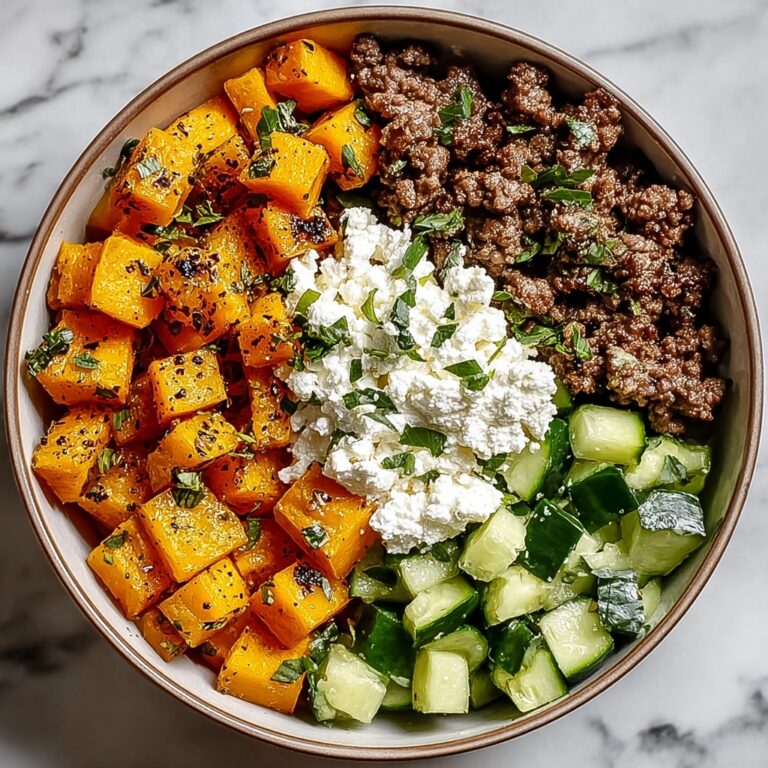
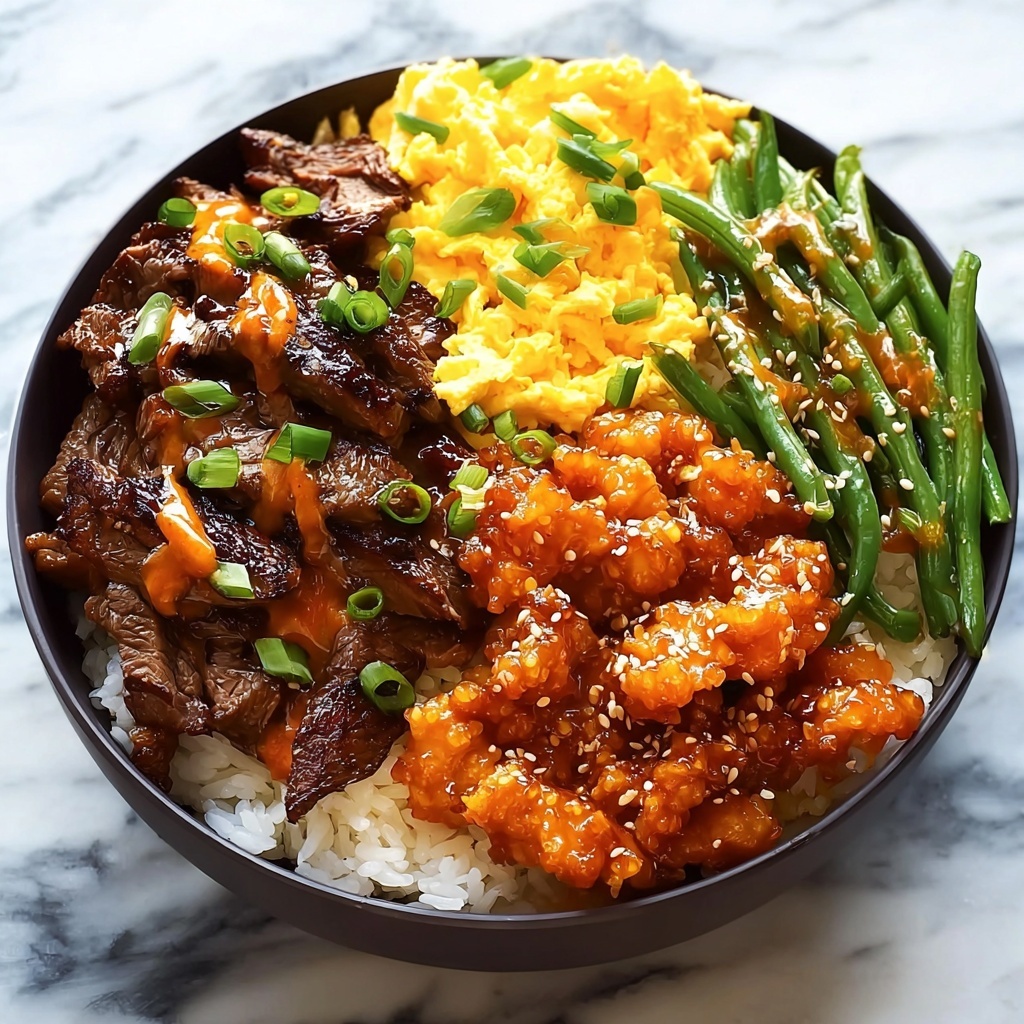
If you’re craving a dish that perfectly balances bold flavors, vibrant colors, and a little spicy kick, you’ve got to try this Korean Spicy Beef Bowls Recipe. It’s a delightful combination of tender, marinated beef, fresh crunchy vegetables, and fluffy steamed rice—all brought together with a savory and spicy sauce that sings with authentic Korean flavors. Whether you’re cooking for family or friends, this recipe is sure to impress and become a go-to for quick, satisfying meals.
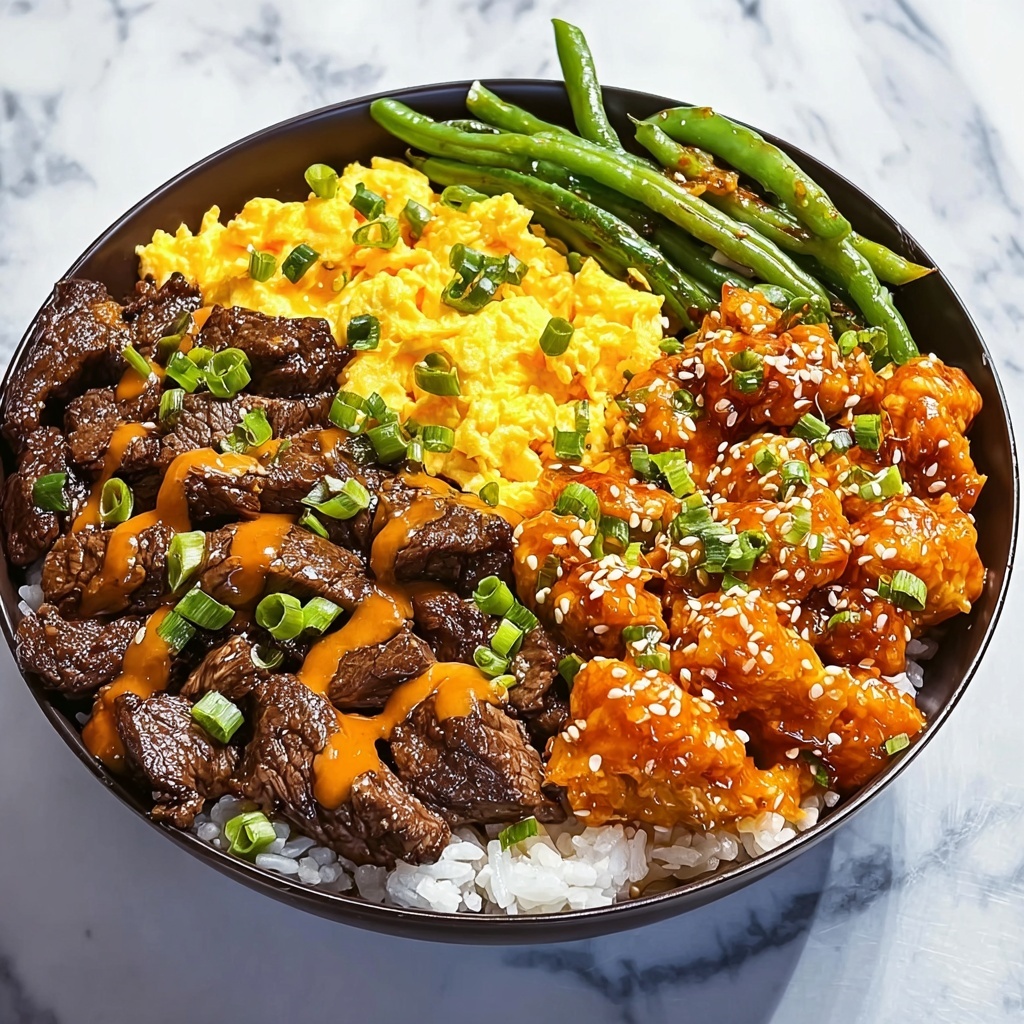
Ingredients You’ll Need
These ingredients are simple but essential to make your Korean Spicy Beef Bowls Recipe shine. Each one provides a unique contribution—whether it’s the rich umami depth of soy sauce, the fiery sweetness of gochujang, or the fresh crunch of crisp veggies. Let’s dive into what makes this recipe work so well.
- 1 lb flank steak or sirloin: Thinly sliced for quick cooking and tender bites.
- 2 tablespoons soy sauce: Adds salty, savory umami to the marinade and final dish.
- 2 tablespoons gochujang (Korean red pepper paste): A spicy, slightly sweet chili paste that defines the heat and flavor.
- 1 tablespoon brown sugar: Balances the heat with a touch of caramel sweetness.
- 1 tablespoon sesame oil: Provides a nutty aroma that’s unmistakably Korean.
- 2 cloves garlic, minced: Boosts flavor with pungent freshness.
- 1 teaspoon ginger, minced: Adds warmth and a hint of spice.
- 1 tablespoon vegetable oil: For stir-frying the beef and vegetables.
- 2 cups cooked jasmine or white rice: The comforting base for your flavorful beef and veggies.
- 1 cup bell peppers, sliced (any color): Brightens the bowl with sweet crunch and vivid color.
- 1 cup carrots, julienned: Adds a crisp, fresh sweetness and color contrast.
- 1 cup broccoli florets: Gives a nice texture and brings green vibrancy.
- 2 green onions, chopped: For fresh bite and garnish.
- Sesame seeds for garnish: Adds a little nutty crunch and visual appeal.
How to Make Korean Spicy Beef Bowls Recipe
Step 1: Prepare the Marinade
Start by mixing soy sauce, gochujang, brown sugar, sesame oil, minced garlic, and ginger in a bowl. This marinade is where the magic begins—it infuses your beef with a complex blend of sweet, salty, and spicy flavors that will make every bite unforgettable.
Step 2: Marinate the Beef
Toss the thinly sliced flank steak or sirloin into the marinade, making sure every piece is well coated. Let it soak up those flavors for at least 15 minutes. This step is crucial because it tenderizes the meat and packs it full of taste.
Step 3: Cook the Rice
While your beef marinates, get the jasmine or white rice cooking according to package instructions. The fluffy rice serves as the perfect bed for all the bold flavors that will come later, absorbing every drop of sauce.
Step 4: Sauté the Beef
Heat vegetable oil in a large skillet or wok over medium-high heat. Lay the marinated beef in a single layer and cook for 2 to 3 minutes on each side until nicely browned and cooked through. This quick sear locks in the juices and caramelizes the marinade.
Step 5: Stir-Fry the Vegetables with Beef
Add bell peppers, carrots, and broccoli directly to the pan. Stir-fry everything together for about 3 to 4 minutes, just enough for the vegetables to become tender-crisp, offering a perfect contrast to the savory beef.
Step 6: Final Seasoning Check
Give your stir-fry a taste and add more soy sauce or gochujang if you want to turn up the saltiness or heat. This final adjustment personalizes the Korean Spicy Beef Bowls Recipe to your palate and elevates the overall flavor.
Step 7: Assemble the Bowls
Divide your cooked rice into serving bowls, then generously pile on the spicy beef and vegetable mixture. Top with chopped green onions and a sprinkle of sesame seeds for that extra burst of flavor and texture.
Step 8: Serve and Enjoy
Serve immediately while everything is warm and aromatic, and prepare for compliments because this Korean Spicy Beef Bowls Recipe is truly a crowd-pleaser.
How to Serve Korean Spicy Beef Bowls Recipe
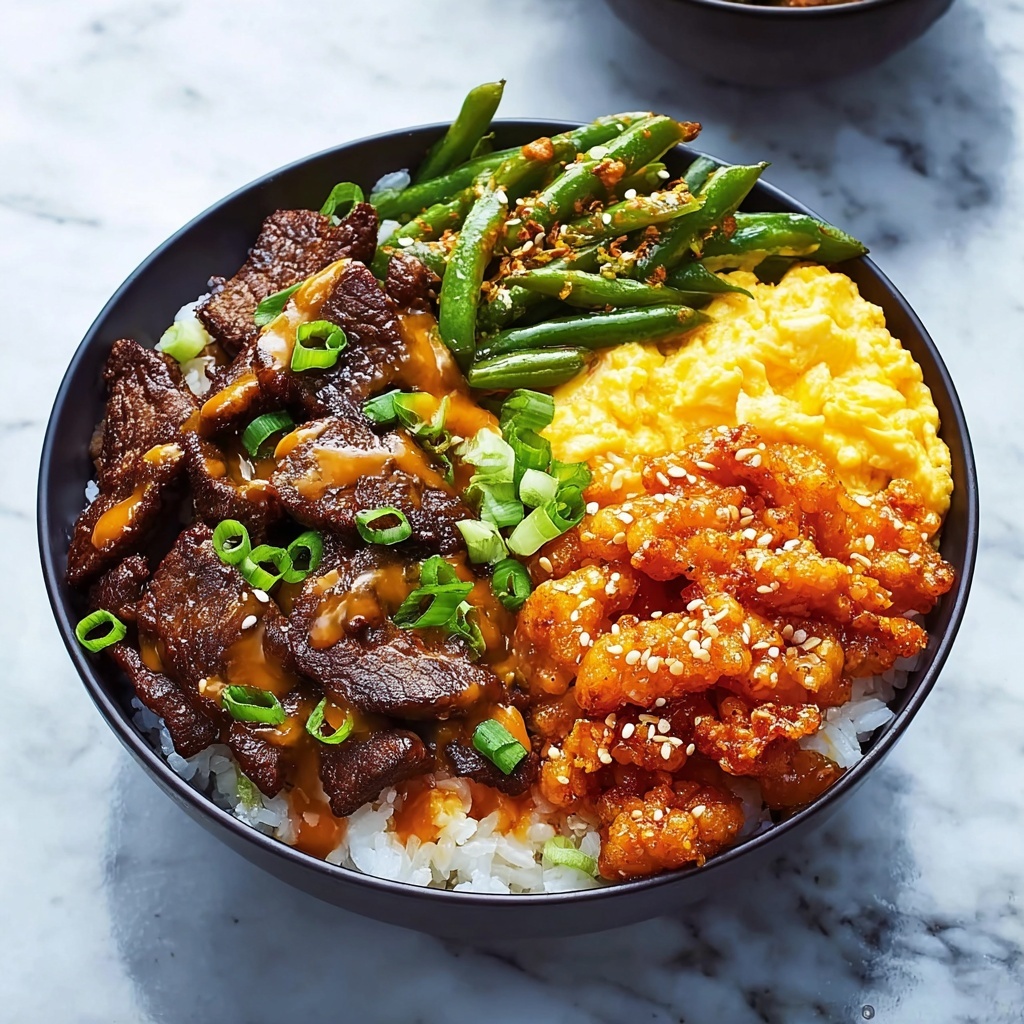
Garnishes
Fresh green onions and toasted sesame seeds are classic garnishes that add both a pop of color and crunch to your beef bowls. If you want to get creative, sprinkle some thinly sliced fresh chili or a drizzle of sesame oil for extra aroma and heat.
Side Dishes
These bowls are fantastic on their own but pair them with simple Korean side dishes like kimchi, pickled radishes, or a crisp cucumber salad to add refreshing contrasts that balance the heat and richness of the beef.
Creative Ways to Present
Serve your Korean Spicy Beef Bowls Recipe in beautiful ceramic or wooden bowls to enhance the dining experience. For a fun twist, offer lettuce leaves on the side for wrapping the beef and veggies, turning it into a hand-held delight.
Make Ahead and Storage
Storing Leftovers
Place any leftover beef and vegetables in an airtight container and store in the refrigerator for up to 3 days. Keep the rice separate if possible to avoid it becoming mushy and to maintain the fresh texture when reheating.
Freezing
This recipe freezes well if stored properly. Pack the beef and veggie mix in a freezer-safe container and store for up to 2 months. Thaw overnight in the fridge before reheating to keep the best flavor and texture.
Reheating
Reheat the beef and vegetables in a skillet over medium heat for best results, adding a splash of water or soy sauce if it seems dry. Warm the rice separately, either in the microwave or steamed, then assemble your bowl fresh for a quick and delicious meal.
FAQs
Can I use a different cut of beef for this recipe?
Absolutely! While flank steak or sirloin is ideal for this dish due to their tenderness and quick cooking time, you can substitute with skirt steak or even ribeye thinly sliced. Just keep an eye on the cooking time to prevent overcooking.
Is gochujang spicy? Can I adjust the heat?
Gochujang does have a mild to moderate heat with a touch of sweetness. If you prefer less heat, start with a smaller amount and increase to taste. You can also balance the spice by adding more brown sugar in the marinade.
Can I make this dish vegetarian?
Definitely! Swap out the beef for firm tofu or tempeh, and follow the same marinade and cooking process. The vibrant veggies and sauce make it just as tasty without the meat.
What rice works best with Korean Spicy Beef Bowls Recipe?
Jasmine or plain white rice are both excellent choices as they provide a neutral, fluffy base that soaks up the sauce beautifully. Short grain rice works well too if you prefer a stickier texture.
How long can I marinate the beef?
Marinating for 15 to 30 minutes is perfect to absorb the flavors without breaking down the beef too much. You can marinate up to 2 hours in the fridge if you want a deeper flavor, but avoid going much longer to keep the texture ideal.
Final Thoughts
This Korean Spicy Beef Bowls Recipe is one of those rare meals that hits all the right notes—spicy, savory, sweet, crunchy, and comforting all at once. It’s quick enough for a weeknight dinner but special enough to serve guests. I promise once you try it, it’ll become a cherished favorite in your cooking rotation. Don’t hesitate, grab those ingredients, and get cooking—your taste buds will thank you!
Print
Korean Spicy Beef Bowls Recipe
- Prep Time: 10 minutes
- Cook Time: 15 minutes
- Total Time: 25 minutes
- Yield: 4 servings
- Category: Main Course
- Method: Frying
- Cuisine: Korean
Description
Korean Spicy Beef Bowls are a flavorful and quick-to-make dish featuring tender marinated flank steak stir-fried with vibrant vegetables and served over steamed jasmine rice. The combination of gochujang, soy sauce, and sesame oil creates an irresistible spicy and savory glaze that perfectly complements the fresh vegetables and tender beef, making this a perfect meal for a satisfying weeknight dinner.
Ingredients
Marinade and Beef
- 1 lb flank steak or sirloin, thinly sliced
- 2 tablespoons soy sauce
- 2 tablespoons gochujang (Korean red pepper paste)
- 1 tablespoon brown sugar
- 1 tablespoon sesame oil
- 2 cloves garlic, minced
- 1 teaspoon ginger, minced
- 1 tablespoon vegetable oil (for cooking)
Vegetables and Garnish
- 1 cup bell peppers, sliced (any color)
- 1 cup carrots, julienned
- 1 cup broccoli florets
- 2 green onions, chopped
- Sesame seeds for garnish
Carbohydrate Base
- 2 cups cooked jasmine or white rice
Instructions
- Prepare the Marinade: In a bowl, combine soy sauce, gochujang, brown sugar, sesame oil, garlic, and ginger; mix well until the sugar dissolves and the ingredients form a smooth marinade.
- Marinate the Beef: Add thinly sliced beef into the marinade, tossing to coat evenly. Allow the beef to marinate for 15–30 minutes to absorb the flavors.
- Cook the Rice: While the beef marinates, cook jasmine or white rice according to package instructions until fluffy.
- Heat the Oil: Heat vegetable oil in a large skillet or wok over medium-high heat, ensuring the pan is hot but not smoking.
- Cook the Beef: Add the marinated beef in a single layer and sear it for 2–3 minutes on each side, or until browned and cooked through, taking care not to overcrowd the pan.
- Add and Stir-Fry Vegetables: Incorporate the bell peppers, carrots, and broccoli into the skillet with the beef. Stir-fry together for 3–4 minutes until the vegetables are tender-crisp.
- Adjust Seasoning: Taste the beef and vegetables mixture; add additional soy sauce or gochujang if more saltiness or spice is desired, mixing well to combine.
- Assemble the Bowls: Divide the cooked rice evenly among four bowls. Top each with the spicy beef and vegetable stir-fry.
- Garnish and Serve: Sprinkle chopped green onions and sesame seeds on top of each bowl. Serve warm and enjoy your Korean Spicy Beef Bowls.
Notes
- For a milder dish, reduce the amount of gochujang or substitute with a mild chili paste.
- You can swap flank steak with sirloin or ribeye thinly sliced for tenderness.
- Feel free to use brown rice or cauliflower rice for a healthier alternative.
- Marinating the beef for a full 30 minutes enhances the flavor but 15 minutes also works if short on time.
- Use any mix of colorful vegetables you prefer or have on hand to add variety and nutrition.
- Leftovers can be stored in an airtight container in the refrigerator for up to 2 days.